
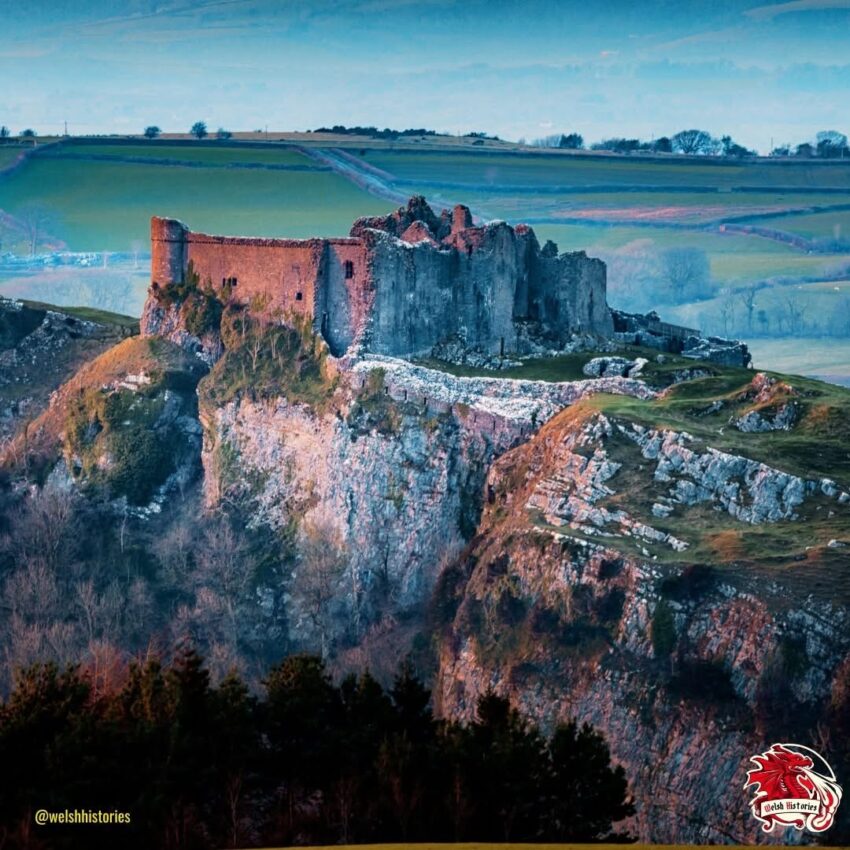
Castell Carreg Cennen is a 12th century castle near Llandeilo, Sir Gaerfyrddin (Carmarthenshire).
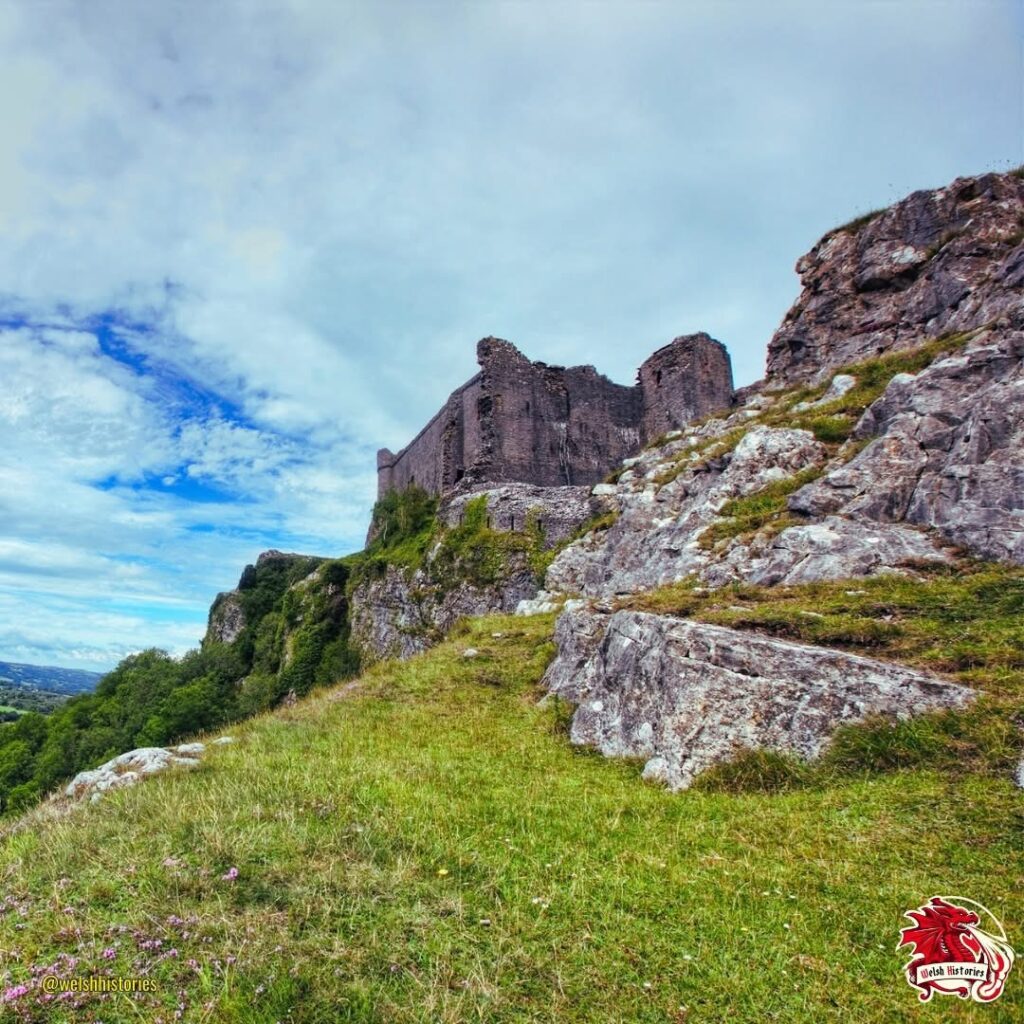
Castell Carreg Cennen is built on a large hill which is believed to have once been home to an Iron Age hillfort. This castle is also adjacent to Afon Cennen, which would have once been its primary water source.
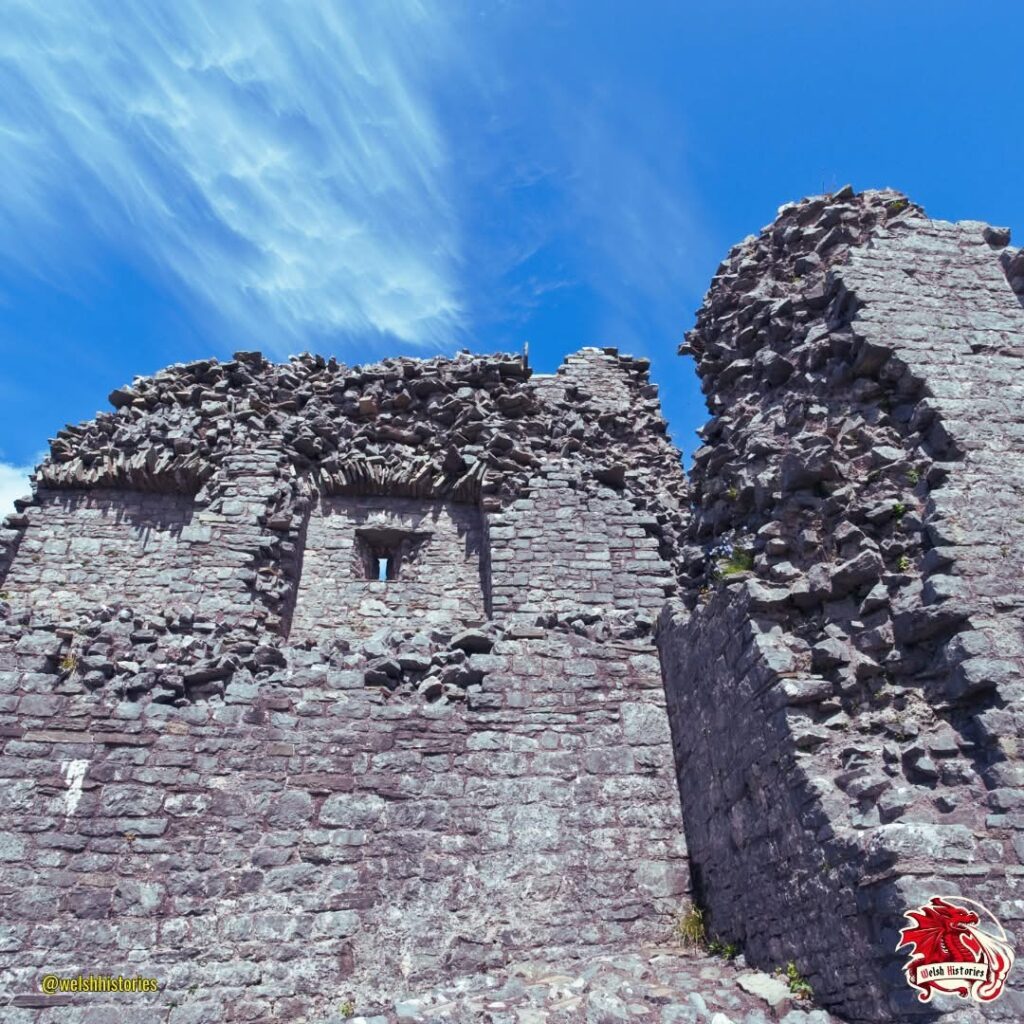
Castell Carreg Cennen is believed to date back to the reign of Rhys ap Gruffydd (1132–1197) – a mighty Welsh King of the Kingdom of Deheubarth, synonymous for his battles with the Norman Marcher Lords who infamously executed his warrior princess mother, Gwenllian ferch Gruffydd. He successfully concentrated Welsh power within the south of the country during a time when the Kingdom of Gwynedd had long been the dominant Welsh kingdom. A primary source of Welsh history, Brut y Tywysogion (1248), mentions the existence of Castell Carreg Cennen.
Following the death of Rhys ap Gruffydd in 1197, the Kingdom of Deheubarth fell apart and a century of division began. By the time of the Edwardian Conquest of Wales in 1277 (the first phase), however, the Welsh lords of the region had sided with King of England, Edward I. This meant that, for the first time, Castell Carreg Cennen was in Norman-English hands.
It is worth mentioning that the same Welsh Lords also switched sides during the second phase of the Edwardian Conquest in 1282. Briefly, for a period of around 1 year, the castle was once more in the service of a Welsh King.
Immediately following the culmination of the Conquest of Wales, the castle would be gifted to the English knight and loyal commander of Edward I, John Giffard, who successfully led Norman-English soldiers at the Battle of Irfon Bridge – the decisive, consequential battle where Llywelyn ap Gruffydd was killed (Cilmeri, 1282).
After the Edwardian Conquest of Wales, there would be few historic chapters associated with Carreg Cennen:
Rhys ap Maredudd, the great-grandson of the castle’s founder, Rhys ap Gruffydd, would briefly recapture the castle in the 1287 Rebellion. He was captured and executed for “treason” in 1292.
In 1403, the great Welsh leader, Owain Glyndŵr, attempted to capture the castle with some 800 men. Though unsuccessful, the castle walls were severely damaged.
During the Wars of the Roses (1455-1487), the castle was in the hands of the Lancastrians. A Yorkist victory at the Battle of Mortimer’s Cross in 1461 resulted in the castle coming under Yorkist control and the castle was slighted (put out of use/destroyed) so it could be of no further use to the enemy.
Following these events, the castle fell into relative obscurity and irrelevance. It became an attraction for poets, thinkers and painters (such as J. M. W. Turner who painted the castle in 1798) – a romantic ruin tends to do so!
Nowadays, the castle is under the care of Cadw. I am yet to personally visit Carreg Cennen but hope to do so soon. You should, too!
More from Welsh Histories
Welsh Histories is a Welsh history celebrating platform which looks to promote all aspects of Welsh history. Though we focus predominantly on native Welsh history, we do also share the non-native aspects from time to time. You can follow us on Facebook; Instagram or Twitter for more. A reader? We also have our very own Welsh Histories Shop where we sell our Welsh Histories Magazine. Diolch yn fawr iawn and keep enjoying Welsh Histories.

DIGITAL Welsh Histories Magazine – September 2025

Niklas is the founder, owner, manager, editor, writer, video creator, voice over artist, and so forth, of Welsh Histories. He is passionate about the preservation of Welsh culture; the rejuvenation of the Welsh language and the promotion of Welsh history. Niklas currently resides in Pune, Maharashtra, with his beloved wife.