
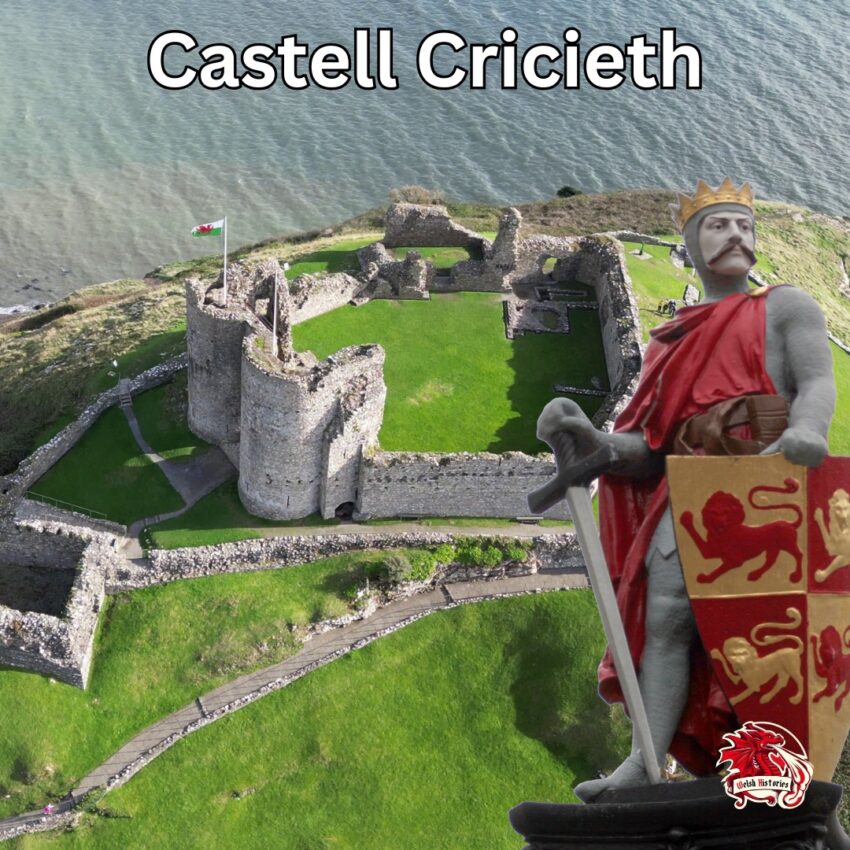
For me personally, Castell Cricieth – located in the town of Cricieth, Gwynedd – is one of the better looking of the remaining native castles of Cymru.
Who Built Castell Cricieth?
Llywelyn Fawr had the current castle constructed sometime around the 1230s AD. The 13th century was a rather chaotic time for the Welsh as the Norman-English were pushing further and further into Welsh lands. Llywelyn recognised this and embarked on a period of castle building which resulted in castles such as Cricieth.
Throughout the 13th century following death of Llywelyn Fawr in 1240, the castle was partially used as a prison. In fact, some noteworthy prisoners were sons of Llywelyn himself, with the son and heir of Llywelyn, Dafydd ap Llywelyn, having imprisoned his half-brothers in the castle.
By 1283, the castle and town had been captured by Edward I (known as Edward Longshanks) during the Edwardian Conquest of Wales. Rather than dismantle the castle as he had done with other native Welsh castles, Edward spent considerable amounts of money on further fortifying and improving the castle.
These costly improvements would not be enough to deter Madog ap Llywelyn (?-1312) during his rebellion against the Norman-English conquerors, however, as he would besiege the castle in 1294. The siege would be lifted in the following year as the rebellion faltered but not without some scares, such as Madog’s siege of Conwy Castle in which Edward I was himself present at. Cricieth would become a prison once more following its restoration.
The castle did fall into Welsh ownership once more during the 14th century, when it was granted to Syr Hywel y Fwyall/Sir Hywel ‘of the Axe’ (a nickname earned for decapitating the horse of the French King, John II, in one fatal swing at the Battle of Poitiers in 1356) by Edward III – his son, Edward the Black Prince, also knighted Hywel.
The castle would be destroyed by fire during the early parts of the 15th century and it is not certain whether this is attributable to its 1404 capture the forces of Owain Glyndŵr during his Uprising between 1400-1415. Some attribute the fire to sometime in the middle of the century.
Little else of historical significance occurred at the castle following the 15th century. Like other native Welsh castles covered so far, it became a romantic ruin; attracting poets, thinkers and artists (such as J. M. W. Turner, who drew the castle in his 1798 drawing “Crickieth Castle”.
The castle underwent some further repairs in the late 19th century and eventually came back into state ownership, which it remains in under the care of Cadw.
If you are ever in the northwest of the country, make sure to visit Castell Cricieth!
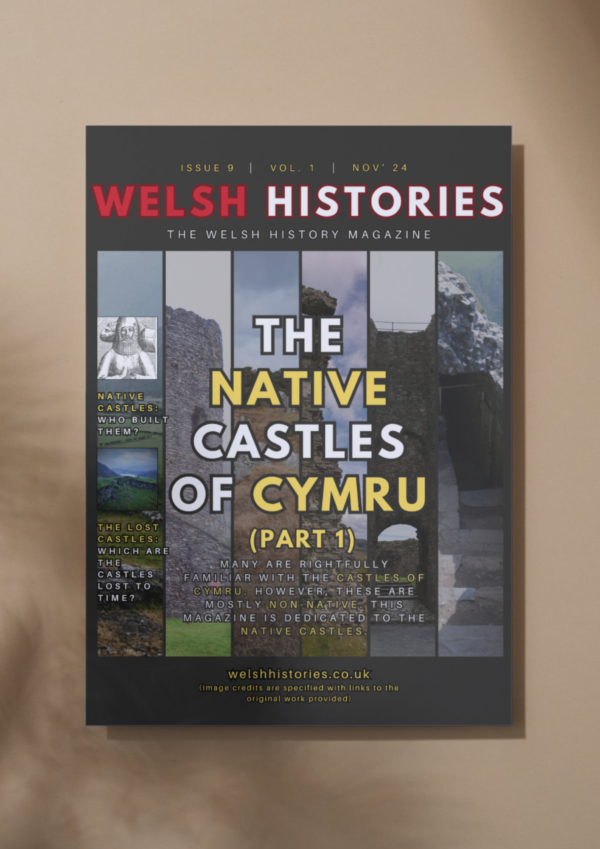
DIGITAL COPY Welsh Histories Magazine – November 2024
Welsh Histories Magazine November 2024 – DIGITAL COPY
The digital edition of Welsh Histories Magazine for November 2024 has finally arrived! This month, the magazine delves into the individual histories of the native Welsh castles, so don’t expect to see Conwy, Caernarfon and so forth in here. We also have articles explaining what native Welsh castles are and who they were built by, so we have got you covered. We also have our reader submission of the month and a message from the editor (me)!
This is also part 1 of the native Welsh castles theme.
This month’s magazine has been written, created and designed by Niklas George (Welsh Histories founder and owner). We have no guest writer this month.
Happy reading!
If you have any issues with receiving and downloading your copy, please send all queries to: niklas@welshhistories.co.uk.
More from Welsh Histories
Welsh Histories is a Welsh history celebrating platform which looks to promote all aspects of Welsh history. Though we focus predominantly on native Welsh history, we do also share the non-native aspects from time to time. You can follow us on Facebook; Instagram or Twitter for more. A reader? We also have our very own Welsh Histories Shop where we sell our Welsh Histories Magazine. Diolch yn fawr iawn and keep enjoying Welsh Histories.
More from Welsh Histories
Welsh Histories is a Welsh history celebrating platform which looks to promote all aspects of Welsh history. Though we focus predominantly on native Welsh history, we do also share the non-native aspects from time to time. You can follow us on Facebook; Instagram or Twitter for more. A reader? We also have our very own Welsh Histories Shop where we sell our Welsh Histories Magazine. Diolch yn fawr iawn and keep enjoying Welsh Histories.

Niklas is the founder, owner, manager, editor, writer, video creator, voice over artist, and so forth, of Welsh Histories. He is passionate about the preservation of Welsh culture; the rejuvenation of the Welsh language and the promotion of Welsh history. Niklas currently resides in Pune, Maharashtra, with his beloved wife.