
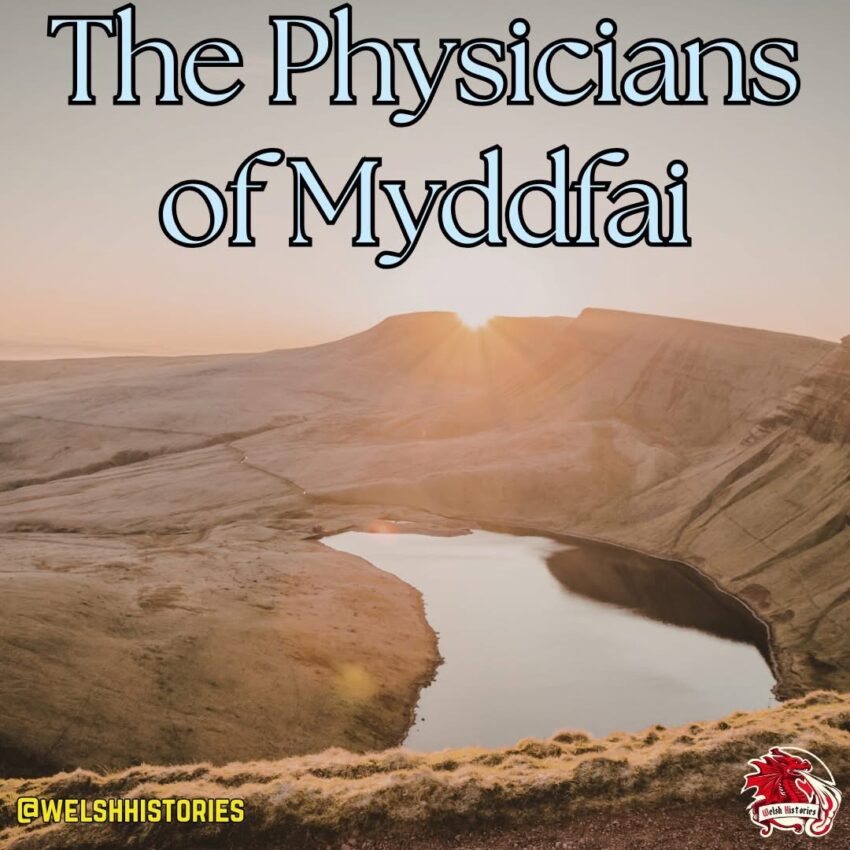
This latest post comes from Padrig and covers the the Physicians of Myddfai. Within Welsh folklore, the Physicians of Myddfai were a long line of physicians based in Myddfai, Carmarthenshire, between the 13th and 18th centuries. Enjoy!
Who Were the Physicians of Myddfai?
In the uplands of Carmarthenshire, close to the quiet waters of Llyn y Fan Fach (pictured), lies one of the most striking stories in our tradition. The Physicians of Myddfai are known today through a mixture of folklore and fact, and the tale begins with a young cattle herder who met a mysterious woman by the lake. She is often called the Lady of the Lake, though some older versions name her Nelferch.
After winning her hand under strict conditions, the herder raised a family whose descendants were said to possess not only her wisdom, but remarkable skill in healing. Though the Lady eventually returned to the lake, her sons carried her teachings into the wider world.
What sets this story apart is that it does not drift away into myth. Instead, it continues straight into the record books.
By the thirteenth century, the Physicians of Myddfai appear as genuine practitioners. Names such as Rhiwallon, Cadwgan, Gruffudd, and Einion are tied to real patients, real households, and – in some accounts – even the court of Prince Rhys Gryg. Their remedies and advice were gathered into manuscripts, preserved in texts such as the Red Book of Hergest.
These writings reveal people who relied on the land around them and understood the ways in which herbs, diet, and daily life shaped a person’s health. Rather than wandering mystics, they were practical healers drawing on generations of accumulated knowledge.
The work attributed to the Physicians shows an approach firmly rooted in the landscape of Cymru:
They made wide use of plants that grow readily in the hills and hedgerows: meadowsweet for fevers, mint for the stomach, foxglove for heart complaints, vervain for aches and strain, and willow bark for pain. Many of these plants are recognised today for the same properties.
From herbs blended with oils or animal fats, they prepared remedies for burns, cuts, infections, and rashes – often mixing soothing herbs with sharper, cleansing ones.
Unusual Methods
They frequently recommended boiled or steeped plant mixtures to clear the chest, steady the nerves, or settle the digestion. These were taken over days rather than moments, showing patience and a belief in steady recovery.
Their notes suggest an understanding that health was not simply cured by herbs alone. They advised on diet, rest, fresh air, and the avoidance of habits that made people ill. This was a rounded way of treating sickness, shaped by everyday experience.
Although most of their work was herbal, some manuscripts include instructions for cleaning, stitching, and dressing wounds, along with ways to keep infection at bay.
The story of the Physicians of Myddfai is unusual in that legend and fact sit side by side without one undermining the other. The tale of Nelferch and the lake gives the tradition a sense of depth and wonder, but the manuscripts show the steady, thoughtful work of families who tended their neighbours for centuries.
Their remedies were copied and passed on well into the nineteenth century, long after the original family line had faded from view. Even now, Myddfai attracts those interested in herbal medicine, folklore, and the long memory of the Welsh landscape.
More from Welsh Histories
Welsh Histories is a Welsh history celebrating platform which looks to promote all aspects of Welsh history. Though we focus predominantly on native Welsh history, we do also share the non-native aspects from time to time. You can follow us on Facebook; Instagram or Twitter for more. A reader? We also have our very own Welsh Histories Shop where we sell our Welsh Histories Magazine. Diolch yn fawr iawn and keep enjoying Welsh Histories.

DIGITAL Welsh Histories Magazine – December 2025

Niklas is the founder, owner, manager, editor, writer, video creator, voice over artist, and so forth, of Welsh Histories. He is passionate about the preservation of Welsh culture; the rejuvenation of the Welsh language and the promotion of Welsh history. Niklas currently resides in Pune, Maharashtra, with his beloved wife.