
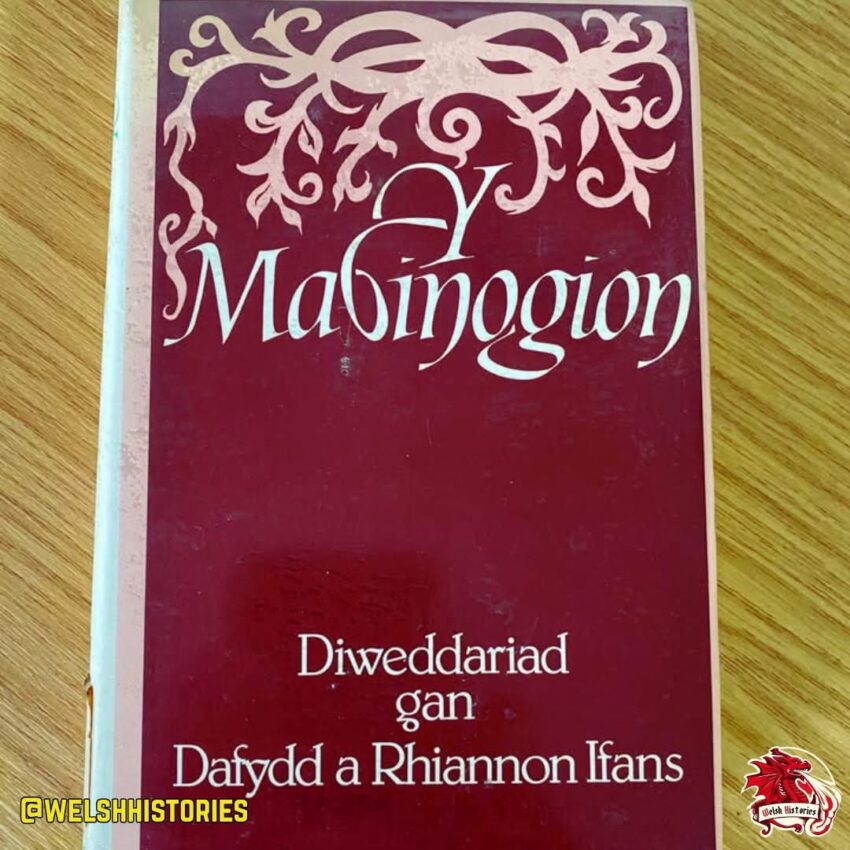
The Mabinogion stands as one of the great literary treasures of Cymru – a collection of medieval tales that weave together myth, folklore, and early Arthurian legend. These stories offer a rare window into the imagination of early Celtic society, where the natural and supernatural worlds were never far apart.
What is the Mabinogion?
Long before they were written down, these stories were kept alive by the voices of Welsh bards and storytellers. They spoke of gods, heroes, enchantments, and otherworldly journeys – stories that may trace their origins back to pre-Christian Celtic myth. Over centuries of retelling, these oral traditions evolved into the literary form we now know as The Mabinogion.
The tales were eventually preserved in two important 14th-century manuscripts: the White Book of Rhydderch (Llyfr Gwyn Rhydderch) and the Red Book of Hergest (Llyfr Coch Hergest). Written in Middle Welsh, they safeguarded a vast store of cultural memory. The title “Mabinogion” itself was coined in the 19th century by Lady Charlotte Guest, whose English translation (1838–1849) introduced these tales to the wider world – though the name actually came from a medieval copyist’s error. The correct term, “Mabinogi,” means “tale of youth.” Still, Mabinogion has endured as the familiar name ever since.
At the heart of the Mabinogion are the Four Branches of the Mabinogi:
Pwyll, Prince of Dyfed
Branwen, Daughter of Llŷr
Manawydan, Son of Llŷr
Math, Son of Mathonwy
These stories explore magic, destiny, betrayal, and transformation – where gods walk among mortals, animals speak, and oaths shape the fates of kingdoms. Alongside them stand other remarkable tales, such as Culhwch and Olwen (an early Arthurian adventure) and The Dream of Macsen Wledig, which blend history and legend.
Among the most famous legends connected to this mythic tradition is the story of the red and white dragons beneath Dinas Emrys, a hill in Eryri. When Brennin Gwrtheyrn (King Vortigern) tried to build a fortress there, each night the walls mysteriously collapsed. His wise men advised him to find a child born without a father – a prophecy that led to the discovery of the boy Myrddin Emrys, sometimes known by the English name Merlin.
Myrddin revealed that two dragons – one red, one white – were locked in battle beneath the hill. The white dragon represented the invading Saxons; the red dragon symbolised the native Britons. When the red dragon triumphed, Merlin foretold, Cymru would prevail. The red dragon ‘Y Ddraig Goch’ would later become the emblem of Cymru – still flying proudly on the national flag today.
When Lady Charlotte Guest’s translations appeared in the 19th century, they captivated Victorian readers and helped spark renewed interest in Celtic mythology. For Cymru, this rediscovery marked an important cultural revival – a reaffirmation of national identity through ancient storytelling.
In modern times, the Mabinogion continues to inspire writers, artists, and musicians. Authors like J.R.R. Tolkien, Alan Garner, and Susan Cooper drew upon its imagery and themes, while Welsh scholars and creatives use it to reconnect audiences with the landscape and language of their ancestors – from Dyfed (Pembrokeshire) to Gwynedd, Eryri, and beyond.
More from Welsh Histories
Welsh Histories is a Welsh history celebrating platform which looks to promote all aspects of Welsh history. Though we focus predominantly on native Welsh history, we do also share the non-native aspects from time to time. You can follow us on Facebook; Instagram or Twitter for more. A reader? We also have our very own Welsh Histories Shop where we sell our Welsh Histories Magazine. Diolch yn fawr iawn and keep enjoying Welsh Histories.

DIGITAL Welsh Histories Magazine – December 2025

Niklas is the founder, owner, manager, editor, writer, video creator, voice over artist, and so forth, of Welsh Histories. He is passionate about the preservation of Welsh culture; the rejuvenation of the Welsh language and the promotion of Welsh history. Niklas currently resides in Pune, Maharashtra, with his beloved wife.