
Bore da, bawb!
It was on September 3 in 1939 when the United Kingdom entered the Second World War.
Did you know that, much like it did in the First World War, the Welsh language would play a role in saving lives?
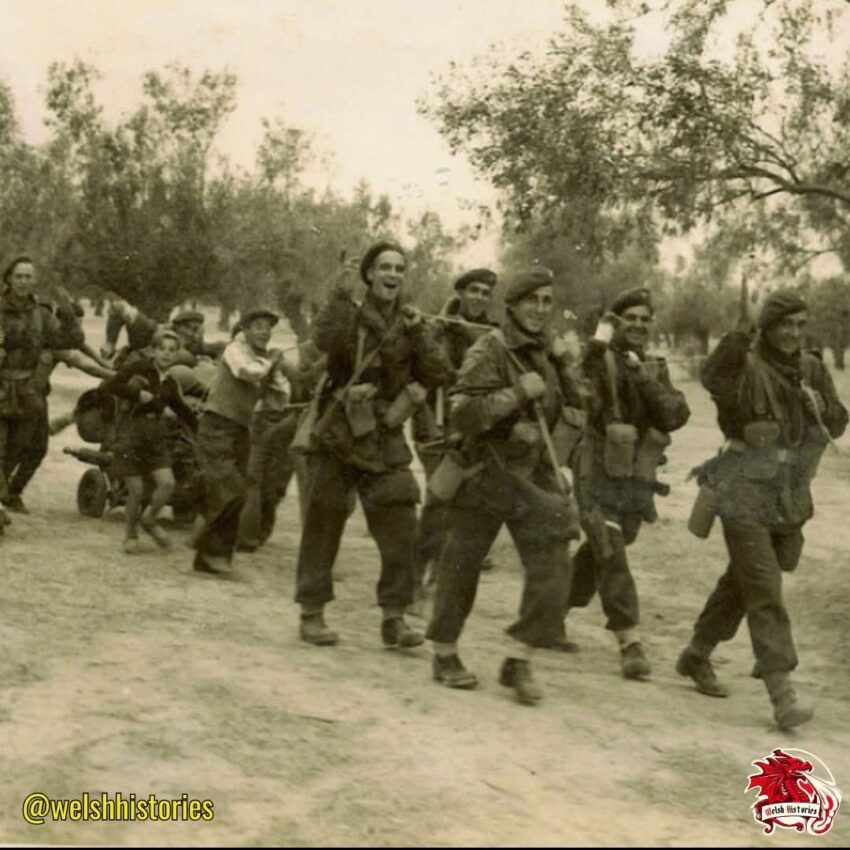
The clearest WWII example of this happening is Reusel, a village in the Netherlands, 1944.
The Royal Welch regiment was involved in this particular skirmish and soldiers had been charging to the entrance of the village church, which contained two Nazi platoons. German machine guns were aimed at the Welsh soldiers, however, so the best move was to withdraw.
Recognising this, and not wanting to make a command which the Nazis would understand, the commander shouted at the top of his lungs for the men to withdraw and he did so in Cymraeg, the Welsh language. The soldiers successfully withdrew after nightfall.
Because of this, more Welsh soldiers in Reusel lived to fight another day and, hopefully, lived to see the end of the war in 1945.
145 British men, 500 Germans and 21 civilians died in Reusel.
(Image Credits: Royal Welch Fusiliers Museum)
More from Welsh Histories
Welsh Histories is a Welsh history celebrating platform which looks to promote all aspects of Welsh history. Though we focus predominantly on native Welsh history, we do also share the non-native aspects from time to time. You can follow us on Facebook; Instagram or Twitter for more. A reader? We also have our very own Welsh Histories Shop where we sell our Welsh Histories Magazine. Diolch yn fawr iawn and keep enjoying Welsh Histories.

DIGITAL Welsh Histories Magazine – September 2025

Niklas is the founder, owner, manager, editor, writer, video creator, voice over artist, and so forth, of Welsh Histories. He is passionate about the preservation of Welsh culture; the rejuvenation of the Welsh language and the promotion of Welsh history. Niklas currently resides in Pune, Maharashtra, with his beloved wife.